All articles
How Renault Turned a Simple Baguette Basket Into a Cross-Channel Comms Strategy
Jim Holder, Director of Communications for Renault Group UK, uses humor and national identity to build a comms narrative that scales across teams and channels.
When the logistics got hard, our marketing team really stood by the idea. It covered a comms story, a social activation, a marketing activation, and it physically drove people into the store.

Jim Holder
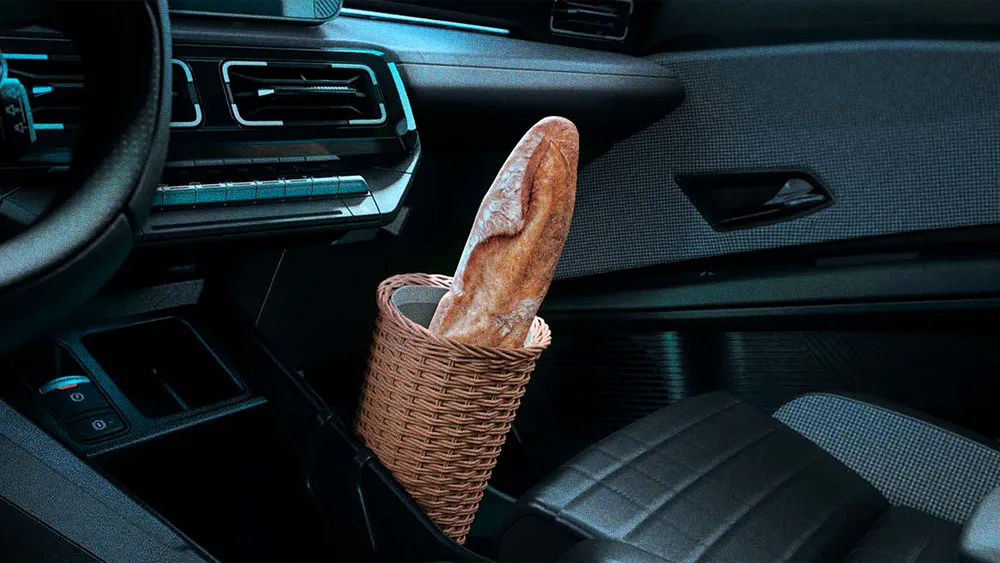
When Renault relaunched the Renault 4 and Renault 5, it didn’t lead with battery range or charging speeds. Instead, it introduced a 3D-printed wicker basket designed to hold a baguette. The feature was a playful nod to French heritage, but more importantly, it gave the brand a clear, ownable idea that could travel across teams and channels. It was even built into the international press dossier, positioning the detail as a deliberate entry point for media. From there, the concept scaled into a broader comms engine, anchoring coverage, social content, and a National French Bread Day activation. In a category dominated by technical messaging, the simplicity of a "dashboard bread basket" created a more accessible story, helping Renault cut through and drive real-world engagement.
Jim Holder, Director of Communications for Renault Group UK, played a key role alongside the wider Renault PR and marketing teams in shaping the campaign strategy. A former editorial director at titles like Autocar and What Car?, Holder brings a deep understanding of what captures media attention. His perspective proved particularly valuable as Renault worked to rebuild its position in the UK following a dip in the late 1990s and early 2000s. The approach was deliberately straightforward: lean into national identity with a sense of humor, rather than relying on traditional brand posturing.
"When the logistics got hard, our marketing team really stood by the idea. It covered a comms story, a social activation, a marketing activation, and it physically drove people into the store," says Holder. The creative risk wasn’t the idea itself, it was in how far to push it. National stereotypes can quickly turn from playful to off-putting if the tone is wrong. Renault avoided that by grounding the execution in self-awareness, keeping the humor light and human rather than exaggerated. The result was a campaign that felt inviting instead of forced. "If we came in with ego and overconfidence, we would be leaning into a national stereotype," Holder explains. "But if you come in cheeky, laugh-at-yourself French, then you are in the right place. We just embraced the warm, lovely, positive side of it all."
Baking in authenticity: To bring the campaign to life, the comms team tapped American-French influencer Claire Dinhut, known online as Condiment Claire. The team already knew her through Renault’s Alpine Formula One brand. Deploying a known car lover and baking expert to reach a completely distinct, non-automotive TikTok demographic gave Renault a way to talk to new audiences while keeping the campaign anchored in real food. "It came together very nicely for Claire to get us a different demographic," recalls Holder. "Her expertise anchored us in an authenticity around the baguette side of things. She already knew the brand, she's been in all our vehicles, and she is quite authentic in her love of the cars."
Knead to drive: Rather than letting the story live in media and social, Renault brought the idea into the real world. Through a National French Bread Day celebration at the brand's Battersea concept store, coverage evolved into a coordinated, in-person engagement. With Dinhut sharing her signature baguette recipes, the execution connected comms, social, and retail around a single objective: drive footfall and get more people into the driver’s seat at a critical moment in EV adoption. "Research shows that most people who try an electric car don't go back," Holder explains. "The more people you can get in the doors seeing the vehicles, the more likely they are to switch. The footfall for the day was five times normal."
Carbs and clickbait: That self-aware humor also delivered a clear communications advantage. Renault needed a more accessible way to promote its award-winning electric lineup. While coverage in trade titles like Autocar reinforced the strength of the vehicles, the baguette holder gave journalists a more compelling entry point. By tying the idea to National French Bread Day, the brand created a timely, culturally relevant hook that extended coverage beyond traditional automotive press. "Winning a major award doesn't automatically guarantee big headlines," Holder notes. "We found the media would hook onto the baguette holder because the idea of a car with a baguette holder winning a best electric car award is a funny story in a tabloid paper."
Taking the idea into the real world turned it into a cross-functional effort. What began as a PR hook quickly required alignment across marketing, retail, and corporate teams, introducing the operational complexity that comes with experiential work. Because the concept was so clearly rooted in Renault’s French identity and the R4 and R5 product story, the comms team was able to move it efficiently through approvals, from the UK team to marketing and up through corporate sign-off in Paris.
Morale on the menu: The campaign’s momentum carried into Renault’s internal culture. The UK Managing Director used the moment to celebrate the R4 and R5 launches by giving baguettes to 150 employees and creating a shared, lighthearted experience. That internal rollout sparked organic advocacy on LinkedIn and reinforced how employee engagement can amplify external campaigns during a brand comeback. "Our Managing Director wanted to bring the team along with us and make a fun occasion of it," says Holder. "It gave a really good talking point internally and through LinkedIn. It brought everyone together to share silliness and smiles."
Renault’s latest initiative shows how a single idea can be operationalized across teams when there’s clear ownership behind it. The concept created a shared platform for communications, marketing, retail, and internal teams, aligning execution around one consistent narrative. Turning that idea into reality required more than creativity. It had to be translated into execution, coordinating the operational details, from sourcing to delivery, that made the activation tangible. The result points to a broader takeaway: simple, culturally grounded ideas are easier to scale when they can be carried consistently across channels and functions. "No one else can do it. Only Renault, really," Holder concludes. "We own the baguette in the automotive space."