All articles
Google Walks Back Exec's Comments on AI Bypassing Search
Google said that its new Gemini 3 AI will handle complex queries within existing search features, refuting an executive's claim that it would bypass traditional results.
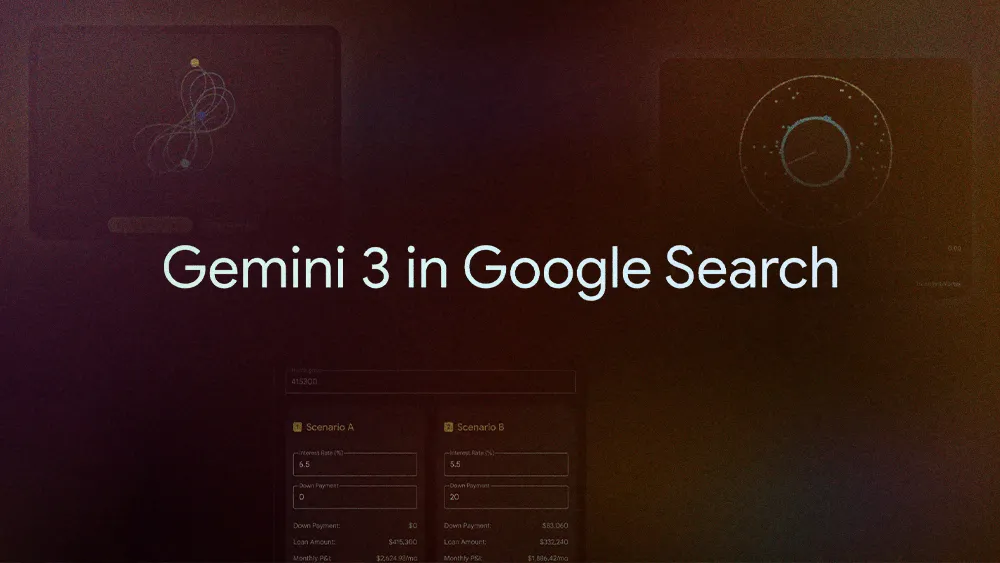

A Google executive sparked confusion by suggesting complex queries would bypass traditional search, a claim the company quickly refuted. Google clarified that its new Gemini 3 AI will handle tough questions within existing AI features, not replace its core search results.
Speaking out of turn: The story began after Jonathon Heard, a Google industry head, stated at a London event that complex queries would be "auto-routed" to AI Mode, implying a dramatic departure from the classic ten blue links. Google moved quickly to correct the record, clarifying that Heard isn't on the Search team and his comments were off the mark.
What's under the hood: The upgrade brings advanced reasoning to Search, allowing Gemini 3 to generate interactive user interfaces on the fly—like a physics simulation instead of just a wall of text. For now, the new capabilities are only available to paid Google AI Pro and Ultra subscribers in the U.S.
The publisher problem: The incident reignited the debate over transparency, as Heard also suggested Google was "looking at" providing specific Search Console data for its AI features. But the company's official stance remains noncommittal, leaving publishers in the familiar position of hoping their content is chosen by the AI without any clear way to measure its performance.
The episode exposes the growing tension between Google's rapid AI deployment and its increasingly fraught relationship with the content creators and publishers who fuel its ecosystem. Meanwhile, the search industry continues to consolidate, with Adobe announcing it will acquire Semrush, and the debate over AI's role extends to publisher controls as Google floats new proposals on how websites can manage access to their content.