All articles
Broadcast-AV Convergence Brings Strategic Imperative for Modern Enterprise Comms
Broadcast-AV convergence is redefining corporate comms. Matt Morgan of Ross Video discusses ROI, reliability, and why human expertise trumps AI hype.
The reality is that if you have engaged employees, you are more productive. You'll retain more revenue. You'll retain people, which saves you money in the long run. Those are real, hard costs that you can measure.

Matt Morgan
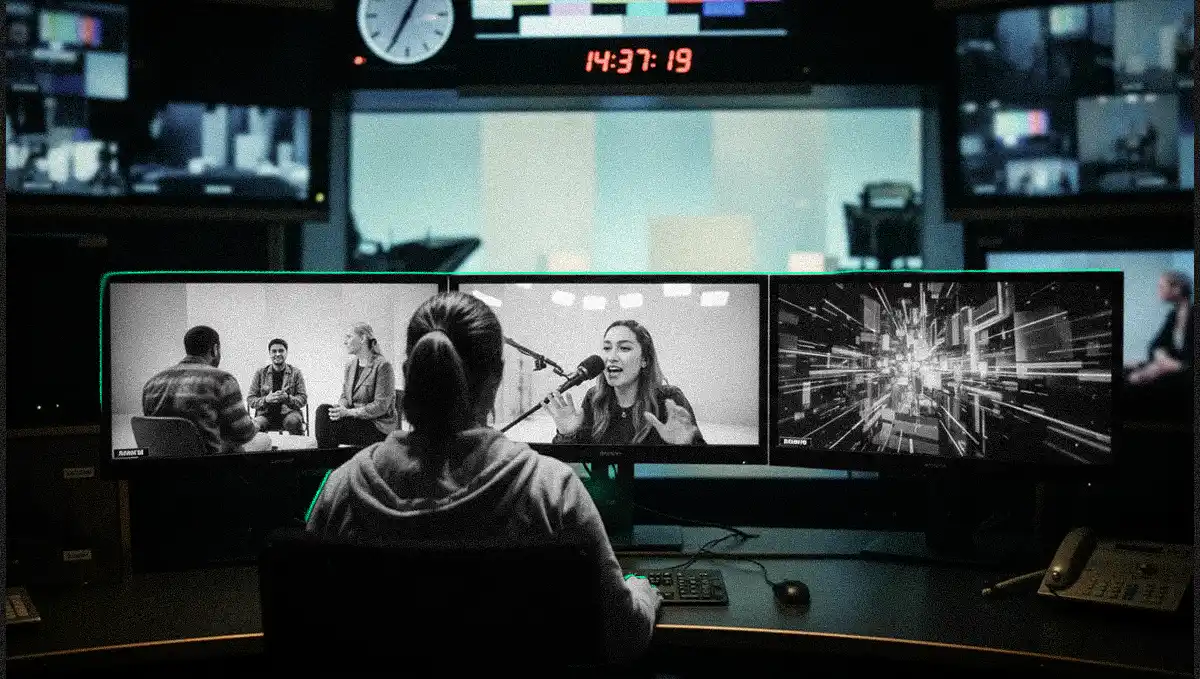
Enterprise communications have long relied on simple AV setups: projectors, conference rooms, and basic video calls. Now, a new player is redefining the landscape. The convergence of professional broadcast technology with corporate AV is giving organizations the ability to deliver high-quality, reliable video content internally and externally, changing how leaders connect with employees, customers, and stakeholders. For marketing and communications leaders grappling with hybrid workforces, fragmented audiences, and engagement challenges, the opportunity isn’t just about flashy production, but delivering value through clarity, reliability, and consistent messaging.
Practitioners like Matt Morgan, Market Development Manager for Ross Video's Broadcast AV division, are working with enterprise studios, corporate communications teams, and live event productions. He sees professional broadcast workflows becoming a practical, measurable tool for improving employee engagement, protecting executive time, and delivering ROI.
While some envision a purely platform-driven market, Morgan cautions that true control and reliability remain paramount. He sees the evolution of enterprise broadcast AV as a blend of flexible tools and human expertise, rather than a simple 'app-based' solution. “The reality is that if you have engaged employees, you are more productive. You'll retain more revenue. You'll retain people, which saves you money in the long run. Those are real, hard costs that you can measure,” he says.
Internal ROI: While flashy productions grab attention, the real pressure for enterprise broadcast AV comes from measurable business outcomes. Morgan estimates that roughly 85% of usage is internal, emphasizing employee engagement, retention, and efficient use of executive time. Reliable, professional-grade systems save time, reduce downtime, and increase engagement. “It’s cheaper to keep somebody than turn them over. Technology that engages employees has measurable ROI,” Morgan notes. Executives’ time is valuable, and robust systems ensure messages are delivered efficiently, even when external platforms like Zoom or AWS face outages.
Skills shift: Internal AV teams are being asked to do more with less experience. Multicam production, graphics, and live editing are becoming standard expectations, stretching traditional skill sets. As a result, integrators and managed service providers are more critical than ever, offering expertise, on-site support, and long-term reliability. Morgan explains, “We can make it appear easy, however, the guy that set that up is super smart and knows everything about those three products.” Manufacturers are adapting by providing templates, educational resources, and intuitive platforms to help internal teams level up without adding complexity.
Morgan cautions against overhyping AI, stating that "We’re stuck in API land still. I tell something, 'When this triggers, this happens.'" Most current solutions, he explains, rely on such trigger-based actions for tasks like camera switching and graphics, but human oversight and editorial judgment remain essential. Full autonomous systems are rare, and as he puts it, “I’m not the person who stands on a panel and goes, AI is the way. We have to teach a lot of people a lot of things first.” Nonetheless, he sees potential for AI to streamline workflows, particularly as younger talent enters the field with comfort in automation and digital tools.
Opportunity for a New Generation: For professionals entering the broadcast AV space, Morgan emphasizes the chance to innovate. The industry is at a tipping point where combining broadcast knowledge with AI and automation can solve real business problems and create high-value workflows. “If younger people lean into this space, combine broadcast knowledge with AI and automation, they’ll solve a big problem and be successful in this world,” he advises. Companies that empower teams with education, adaptable platforms, and thoughtful automation will lead the charge in effective internal and external communications.
For marketing and communications executives, this shift matters because it represents a new standard in storytelling and engagement. High-quality internal broadcasts improve employee engagement and retention, while external broadcasts can strengthen brand perception with customers, investors, and stakeholders. Investing in infrastructure, skilled teams, and reliable systems isn’t just an IT or AV decision, but a strategic communications decision.
Enterprise broadcast AV is no longer optional. It’s a tool for efficiency, engagement, and control in an increasingly remote and hybrid world. Organizations that embrace professional-grade workflows, support internal talent, and thoughtfully integrate automation will be able to communicate with greater clarity, reliability, and impact. As Morgan puts it, “Live events are diving into broadcast AV, giving the backbone and reassurance to customers to go do video however they need to.”