All articles
Storytelling And Voice Decide Whether Internal Comms Reach Employees In The AI Era
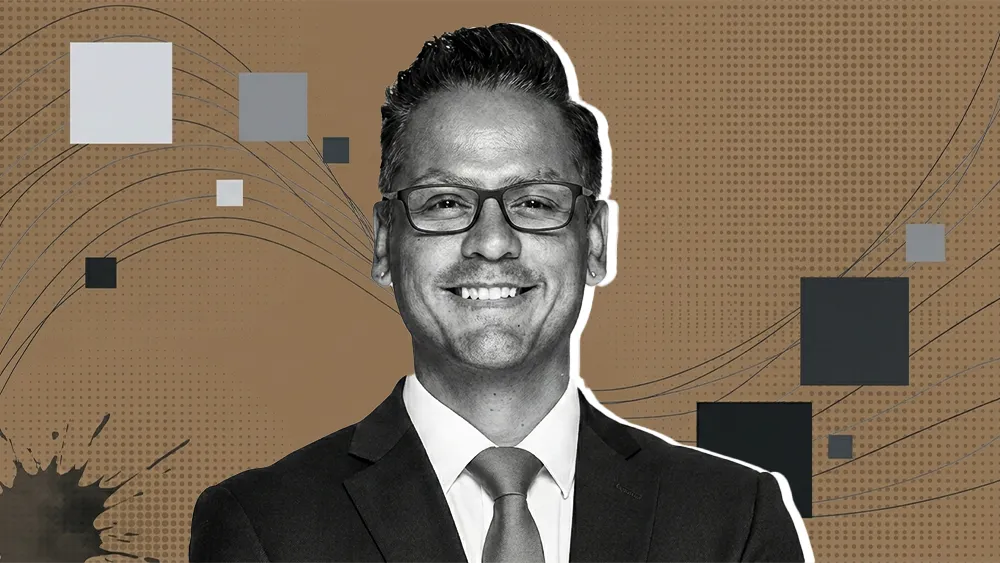
Katelyn Boros, a Communication Specialist, on building a sandbox of human creativity to keep employee messaging from sliding past the people it's written for.
Sometimes you need to create a sandbox of human creativity to generate your own ideas and develop those stories.

Katelyn Boros
The same brain wiring that helps an employee recognize a well-told story is what helps them tune out a flat, formulaic one. Employee attention runs on pattern recognition, which means a message that stops at clean and on-brand can still slide past the people it was written for. Generative tools have unlocked real gains in clarity and speed for internal comms teams, and the harder craft begins after the first draft is in hand.
Katelyn Boros, a Communication and Brand Specialist, has spent the last seven years bringing human-centric engagement strategies into traditionally formal sectors. She has held roles at Export Development Canada, the Senate of Canada and United Way, and a background in psychology and organizational behavior shapes how she thinks about the way messages actually land with employees. Her advice for comms leaders building AI workflows is to protect space for the human work.
"Sometimes you need to create a sandbox of human creativity to generate your own ideas and develop those stories," Boros says. That framing cuts against an unspoken assumption inside many internal comms teams, where more employee-facing output and cleaner copy get read as proof of better engagement. AI handles the first draft beautifully. The harder work of making a draft sound like a person wrote it is where comms leaders earn employee attention.
Generate, generate, generate
The technology now embedded across most comms workflows is built to help teams produce more drafts faster, and the temptation is to keep clicking suggestion buttons until something passable appears, then ship it. "You can generate, you can generate again, and you can keep on generating, and it doesn't mean that it's better, it doesn't mean that it's more creative, and it doesn't mean you're going to yield better results," Boros says.
Her countermove is to anchor the workflow upstream of the tool. Before any draft gets generated, the strategy of the message has to be settled, including who needs to hear it, what shift in understanding or behavior it should produce, and what story it sits inside. AI then runs the draft against that brief. The thinking happens before anyone opens the tool.
The second move sits in the editing pass. Once a draft exists, Boros encourages teams to make personal edits, and consider when it makes sense to keep the rough edges that signal a person, rather than smooth them away. That can mean keeping a contraction the model wanted to formalize, leaving in an aside or a half-joke a leader would actually say, or breaking a sentence the way a person speaks rather than the way a style guide prescribes. Without those moments, employees clock the cadence and disengage, and the engagement gains the workflow was supposed to deliver quietly disappear.
Two jobs at once
AI handles the parts of internal comms that follow rules. It tightens sentences, catches awkward phrasing, and flags inconsistent tone, getting drafts to a publishable baseline faster than a person can. "AI helps you with getting really concise, which is important. It helps you with editing, it helps you with clarity," Boros says. That role is not going away. Letting AI handle the routine editing frees comms leaders to spend their time on storytelling.
Storytelling is the other half of the job, and it is where a comms leader's craft sits. The same instinct that draws an employee into a story also tells them when a draft was published before anyone had a chance to add their voice to it. Prose that is too smooth and too on-brand can start to feel impersonal, and authenticity is what employees reward with their attention. "The absence of mistakes is not the presence of quality results," Boros says. The strongest teams plan for that, building time into the workflow for the messy human pass instead of treating it as something to cut when the deadline tightens.
The payoff reaches beyond the comms function. When internal updates get the same care as external marketing, employees become the most credible voices a company has. "Your internal communications are really quite cyclical. You're never just communicating internally, you're enabling people to be ambassadors of the brand, which is quite external when you think about it," Boros says. Internal comms is really two jobs at once. AI can handle the writing mechanics. The storytelling, the voice, and the choices that make a message feel personal are what comms leaders own.
The road ahead
If internal communications is the fuel, then employee communications is the map. Engagement and brand culture then are the make and model of the car. Sure, mechanics can get a draft out the door, but the direction is what employees actually care about. Purpose is what makes people decide whether to come along for the ride, stay parked, or switch vehicles. "Your roadmap is what energizes people to move forward together. It’s why people want to get in this car instead of another one. This is the brand they want to believe in and help drive forward. Employee communications is critical in establishing that," Boros says.
The views and opinions expressed are those of Katelyn Boros and do not represent the official policy or position of any organization.