All articles
Companies Are Abandoning Linkedin Brand Pages and Betting Everything on Executive Voices
The numbers are hard to argue with. Company page reach has collapsed. Personal profiles are dominating the feed.
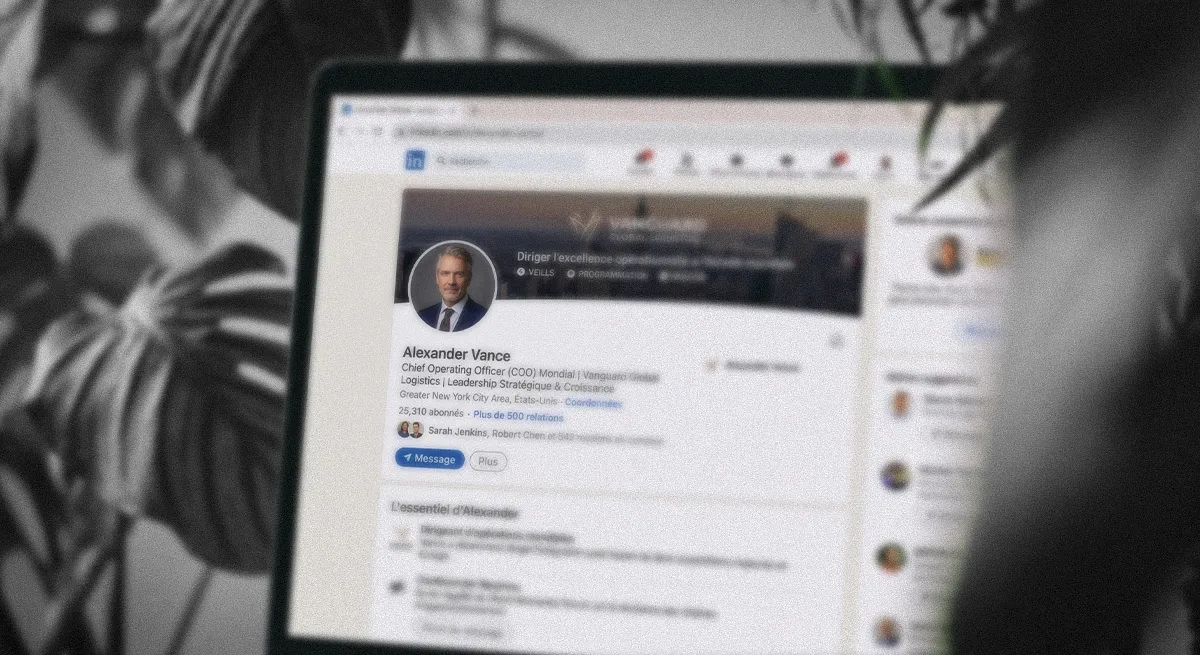

For the better part of a decade, the corporate communications LinkedIn strategy looked roughly the same everywhere: build out the company page, post regularly, track follower counts, report results to leadership. It was tidy. It was measurable. And in 2026, it is falling apart.
A growing body of data now shows that LinkedIn's algorithm has fundamentally shifted in favor of personal profiles and against corporate brand pages. According to analysis from the Algorithm InSights 2025 Report, which examined 1.8 million posts, organic reach from company pages now sits at roughly 1.6% of followers (Entrepreneur, October 2025). That is down from 7% in 2021. Ordinal, a LinkedIn automation platform, reported that company page content experienced a 60 to 66% drop in organic reach between 2024 and early 2026, with posts initially shown to only 2 to 5% of followers before the algorithm decides whether to push them further (Ordinal, January 2026).
Meanwhile, personal profiles are eating the feed alive. DSMN8's analysis of LinkedIn feed composition found that roughly 62% of the average user's feed now consists of posts from first and second degree connections. Company pages account for approximately 5%. Ads take up another 30% (DSMN8, 2025). A Refine Labs study found that personal profile posts generated 2.75 times more impressions and five times more engagement than identical content published from company pages, even when the personal profiles had 46% fewer followers (Refine Labs, cited in Meet Lea, 2026).
This is not a temporary dip. LinkedIn, which now generates over $17 billion in annual revenue and serves more than 1.3 billion registered members globally (Business of Apps, January 2026), has made a deliberate product choice. The platform's algorithm, shaped by an internal model called 360Brew, weights peer-to-peer interactions more heavily than brand-to-audience broadcasting. Research by Richard van der Blom, which analyzed 1.8 million posts, found that posts generating three or more commenters within the first 60 minutes receive approximately 5.2 times the reach amplification, a threshold that personal profiles structurally clear more easily because people comment on people more than they comment on logos (van der Blom, Algorithm InSights 2025).
For communications leaders, this creates a strategic reckoning that goes well beyond social media management.
The CCO's Expanding Mandate Meets a Shrinking Channel
This algorithmic shift collides with a moment when the chief communications officer role is at its most influential. Korn Ferry's 2025 survey of the most senior communications executives across the Fortune 500 found that 47% of CCOs now report directly to the CEO, up from 40% in 2023. More than half, 51%, sit on their organization's executive committee or equivalent senior leadership body. CCO representation on executive committees varies by sector, from 56% in consumer markets to 36% in industrials (Korn Ferry, December 2025).
The same survey found that hiring priorities for communications teams now place social and digital media alongside media relations and crisis management at the top of the list. And 96% of Fortune 500 CCOs say they are leveraging AI in some form, though 29% still lack a defined integration strategy (Korn Ferry, December 2025).
The picture is clear. Communications leaders have more organizational influence, more direct access to the CEO, and more budget than they have had in years. But the primary public platform where their professional audiences spend time is actively deprioritizing the company-level content their teams have been trained to produce.
The Shift From Content Production to Executive Editorial
The response from the sharpest communications teams is not to post more from the brand page. It is to redirect energy toward executive voice.
Social Driver's February 2026 analysis of LinkedIn trends for executives and communicators captured the shift plainly: LinkedIn has become the most visible place where leadership shows up publicly, and when executives are absent, or when their presence feels overly managed, audiences notice (Social Driver, February 2026). The content that performs best in this environment answers a simple reader question: what do I take away from this?
This changes the day-to-day work of communications teams. Supporting an executive on LinkedIn in 2026 looks less like content production and more like editorial guidance. It means helping leaders identify two or three themes they can credibly own, coaching them on authentic voice, and applying strategic restraint rather than volume. One thoughtful post every week or two is outperforming high-volume bursts of activity (Social Driver, February 2026).
Manhattan Strategies, a firm that runs executive LinkedIn programs for enterprise clients, reported that visuals are consistently the strongest predictor of post performance based on analysis of thousands of LinkedIn posts. The firm also noted that content featuring an executive's face drives measurably higher recognition and credibility. One Fortune 100 client saw engagement increase by 63% in its first quarter after implementing a structured program (Manhattan Strategies, March 2026).
The recommended model for time-constrained leaders is a repeatable system: define three to five content pillars, publish one to two posts each week, and reserve a short weekly block for high-quality comments on industry conversations that matter (Manhattan Strategies, March 2026). That last point is critical. Strategic commenting, not just posting, has emerged as one of the most underused levers for executive visibility in 2026.
Employee Advocacy as the New Distribution Engine
Executive voice is only part of the equation. The other half is employee advocacy, which has moved from a nice-to-have communications initiative to a measurable distribution strategy.
According to MSLGroup research, employee-shared content reaches 561% further than equivalent posts from company pages (MSLGroup, cited in DSMN8 and Ordinal, 2026). LinkedIn's own data shows that employees collectively have approximately 10 times more first-degree connections than their company page has followers (LinkedIn Marketing Solutions). The Content Marketing Institute's 2026 B2B Content Marketing report, which surveyed over 1,000 marketers, confirmed that employee advocacy programs are now among the top three fastest-growing B2B content tactics (CMI, 2026).
The Edelman Trust Barometer 2025 adds an important layer: employees are trusted three times more than CEOs as company spokespeople. And 84% of B2B decision-makers say they trust content shared by employees more than identical content shared by company pages (Edelman, 2025; CMI, 2025).
Participation patterns matter. According to Sprout Social's 2025 research, companies where C-suite executives actively participate in employee advocacy see 2.4 times higher employee participation rates than those where leadership sits on the sidelines (Sprout Social, 2025). Nearly 80% of employee advocacy programs now involve senior executives, a figure that has grown by 40% since 2025 (DSMN8, 2026). When the CEO posts, it signals that advocacy is part of the culture, not just another program. That signal cascades.
The financial case is hard to ignore. Companies running structured employee advocacy programs achieve a cost-per-click of $1 to $2, compared to the $5 to $10 average for LinkedIn paid advertising (DSMN8, 2026). Employee advocacy leads convert seven times more frequently than traditional leads (ClearView Social, cited in Meet Lea, 2026). At scale, this is not incremental improvement. It is an 80 to 90% reduction in distribution cost for the same professional audience.
The AI Tension
There is a complicating factor. LinkedIn's internal AI model, 360Brew, is now actively filtering content and comments it identifies as inauthentic or algorithmically manufactured. Audiences, too, are developing a nose for it. LinkedIn itself noted in its 2026 platform guidance that large volumes of AI-generated content tend to sound similar, repetitive, and unremarkable (Workland, January 2026).
For communications leaders, this creates a genuine tension. AI tools are invaluable for structuring thinking and refining language, but the platform is penalizing content that reads as generic. The Gartner 2025 Leadership Vision for CCOs flagged this dynamic explicitly, advising communications leaders to champion responsible AI adoption across the organization while defending the authenticity that audiences demand (Gartner, October 2025).
The practical implication: AI is a drafting tool, not a publishing tool. And the editorial judgment that communications professionals bring, knowing what to say, what not to say, and how the executive actually sounds, has become more valuable, not less.
The Business Case in Plain Numbers
For any communications leader building the internal case for this shift, here is the data that matters:
LinkedIn generates an estimated 75 to 85% of all B2B leads from social media, according to multiple research sources. Personal profiles receive 2.75 times more impressions and five times more engagement than company pages. 59% of decision-makers say they prefer content from individual people over brand accounts (Leadfeeder, May 2026). More than 75% of decision-makers and C-suite executives say a piece of thought leadership led them to research a product or service they had never considered before (The Borden Group, cited in Supergrow, March 2026). And 52% of decision-makers spend at least one hour per week reading thought leadership content (Edelman-LinkedIn 2025 Thought Leadership Report).
Organic reach for company pages has collapsed. Engagement on personal profiles is surging. Trust flows through people, not logos. The math points in one direction.
What This Means for Communications Teams
The communications leaders who are ahead of this curve are treating LinkedIn not as a social media channel to manage but as a leadership medium to steward. They are building editorial frameworks for executives, standing up repeatable systems that do not require the CEO to become a content creator, and measuring outcomes in pipeline influence rather than follower counts.
The ones who are behind are still optimizing posting calendars for brand pages that reach 2% of their audience.
In a landscape where 44% of a company's market value is tied to CEO reputation (Weber Shandwick/KRC Research) and where buyers routinely research leadership profiles before taking meetings, the gap between those two approaches is not just a communications problem. It is a business problem.
And the window to close it is getting smaller.