All articles
Brands Rethink the Rush to Be Everywhere as Strategic Discipline Becomes the New Measure of Success
Leslie Short, President and CEO of The Cavu Group, on achieving brand advantage by aligning purpose and audience.
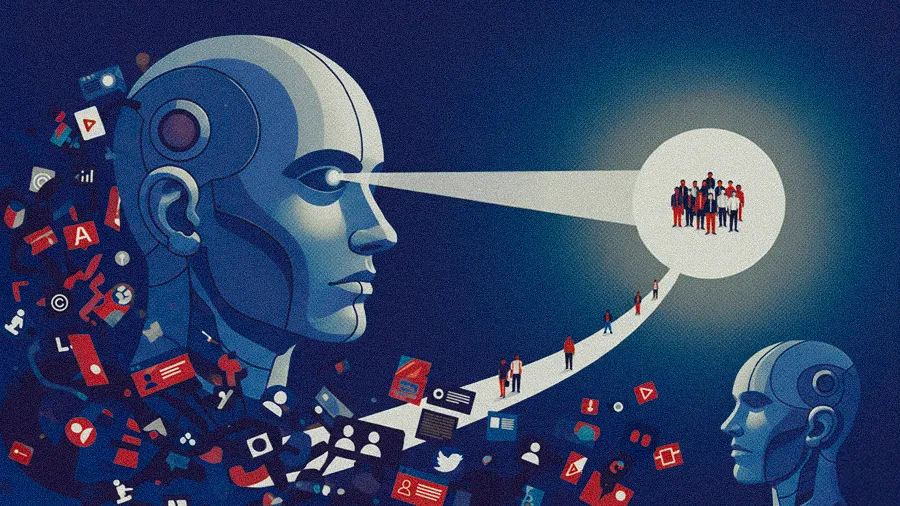
You have the PR company, the brand agency, the advertising agency, and the influencer. But who's speaking to whom? And who's overseeing that to make sure that the message and the point of your campaign actually have the right people involved?
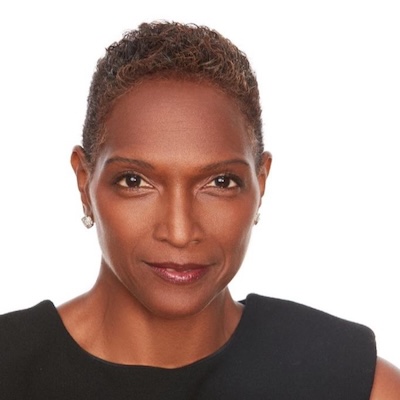
Leslie Short
With platforms, trends, and technologies all vying for attention, the impulse for many brands is to be everywhere at once. But a more effective approach is one of precision, linking sustainable growth to focus instead of volume. It’s built on a new mindset, where the goal isn't simply to be authentic—that's a given—but to cultivate a disciplined brand voice.
We spoke with Leslie Short, the President and CEO of The Cavu Group, a culture consultancy. A strategist with four decades of experience and the author of "Expand Beyond Your Current Culture," Short is an international speaker who's addressed audiences at the United Nations and Fortune 500 companies alike. Her perspective is shaped by high-level operational roles, including overseeing growth for Daymond John's companies, The Shark Group, and blueprint +co. For Short, the industry needs to move beyond surface-level buzzwords and adopt a more rigorous framework for brand-building.
"You have the PR company, the brand agency, the advertising agency, and the influencer. But who's speaking to whom? And who's overseeing that to make sure that the message and the point of your campaign actually have the right people involved? That's where the disconnect with brands happens," Short says.
Start with why: The solution is a simple yet powerful framework, Short explains. It’s a repeatable process designed to prevent the very fragmentation she sees across the industry, where a brand's message can become diluted by too many disconnected voices. "My process with any client starts with a series of fundamental questions: Why are we doing this? And for whom? How does it fit? And how would you tell the story?"
The framework runs counter to the common industry assumption that presence equals power, Short continues. "When I started my firm, everyone was like, 'Oh my god, where's your TikTok account?' And I'm like, 'Yeah, I used to be a classical ballet dancer, but you're not going to see me dancing on TikTok.' That's just not who I am, or my firm."
The right thousand: The goal isn't to reach the most people, but the right people, Short says. It’s about having the discipline to reject popular channels that don't align with the brand's core identity to achieve a deeper connection with a more valuable audience. "I have that happening with a client now. They did an event, and they were like, 'Yeah, it was a thousand people.' I said, 'But they weren't the right thousand people. They weren't your true audience.' People expect everything to be magic, but placing an ad or doing digital marketing ads—they're not magical. You have to be strategic, and that's where that data comes in."
Disciplined approaches require a delicate balance between the analytical and the intuitive, Short continues. Here, the value of data is only realized when it's activated by human interpretation. Supporting her point is the notable gap between marketers' perception of channel performance and how those channels actually perform in terms of ROI.
Data comes alive: In that gap, instinct can make all the difference, Short says. "Data is great if you use it. Many people pay for data but don't use it. So then what's the purpose? You have your data. Then how do you make your data come alive? At what point do you use the data, and what part do you use your gut and combine that?"
The need for discipline also applies to technology and partnerships, Short explains. Any new tool must serve the brand's core identity. Otherwise, the pressure to adopt trends can lead to brand misalignment.
Tech vs. touch: The primary guides for adopting trends like AI must be a brand's identity and its audience's expectations, Short says. "I have a tech client doing fantastic work with their wearable tech. If we have a conversation about AI and how they may want to use that going forward, that makes sense. But I also have a fashion client. I don't want to see AI models there. Someone was trying to sell me on an AI fashion show, and I was like, 'It sounds like a game as opposed to fashion.' People want to see the fabric. It's a feel, it's a touch of a brand, especially a fashion brand. I think you're going to miss that with a fashion show. But I'm all in for building a game."
Beyond the price tag: It's the same story with partnerships, Short continues. Explaining that a celebrity's value is conditional, she asks brands to consider whether a partnership truly adds value to their voice, mission, and audience. "Having a celebrity ad is only as good as that celeb is in that ad at that moment. Suppose they don't resonate with your audience. What does it mean to grab them just because you can and you can afford them?" In her experience, a more strategic path often involves finding authentic connections where influencers become true "curators of their brand," a strategy seen in successful collaborations like the one between American Eagle and Travis Kelce.
Another area ripe with non-obvious opportunities is the rise in women’s sports, Short says. "It can go beyond—and it should go beyond—just the typical sports drinks. I'm looking at cosmetic companies getting into women's sports. You're looking at women's sports, and they're showing up and they're showing up dressed. They're showing up with their makeup, their hair, their accessories. So there's a blend of traditional advertising methods. But again, you can't go grab an athlete and say, 'We're doing this now,' without having a full campaign and a full buy-in of the brand and of your consumer."
Ultimately, the mindset is one of informed curiosity paired with strategic restraint, Short concludes. "I'm a techie that's not a techie. I love to see what is next. Doesn't mean I'm going to use it all the time, but I want to see what happens. AI is still the wild wild west when it comes to advertising, so we have a long way to go before the reality of that authentic voice, I think, creeps through on that part."