All articles
2026 Content Reset Takes Hold As Platforms Reward Expression Over AI-Generated Work
As platforms recalibrate, Nicole Yelland, Principal at GRIT PR, details why discernment, restraint, and human voice now outperform scaled AI content.
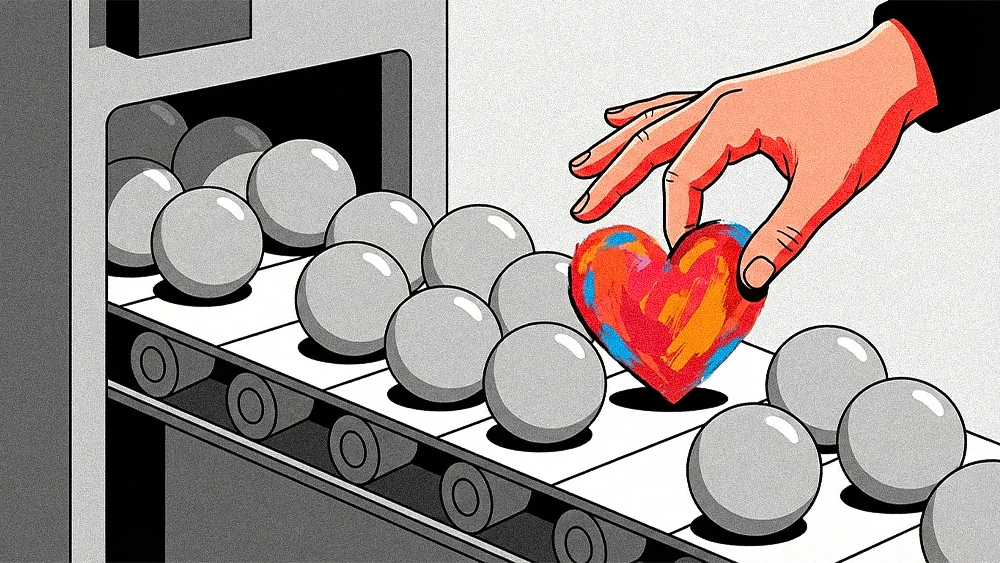
AI is creating more sameness, and sameness has never been interesting. That’s putting real scarcity on flawed, human content. That’s what people are responding to now.

Nicole Yelland
AI made it easy to publish more content, faster. Now, it’s making it harder to be heard. Audiences are quick to spot AI-speak, and platforms like YouTube are actively downranking content that feels automated or generic. The result is showing up in real metrics, with engagement slipping and performance lagging for brands that rely too heavily on machine-generated output. What cuts through now is work that sounds human, looks considered, and carries an actual point of view.
Nicole Yelland believes brand credibility today can quickly collapse without AI content oversight. A communications strategist and Principal of GRIT PR, Yelland specializes in high-stakes messaging for the automotive and fintech industries. Her track record includes leading communications for global brands like General Motors and United Wholesale Mortgage, managing everything from the launch of autonomous vehicle technology to the largest SPAC IPO in NYSE history. She says brands heavily using AI are struggling to differentiate.
"AI is creating more sameness, and sameness has never been interesting. That’s putting real scarcity on flawed, human content. That’s what people are responding to now," says Yelland. In her view, the algorithmic response to AI content is a direct response to human opposition to AI content. Platforms flagging the work of AI is creating new rules in a media landscape where it's increasingly difficult to discern what's real.
Authenticity as signal: Audience skepticism is causing active algorithmic suppression across major platforms. Yelland shares that while some platforms are responding with simple solutions like labeling AI-generated content, the real solution is more creative solutions from comms teams. Imperfect, visibly human content appears to be actively rewarded. "On TikTok, AI-written scripts will get down-ranked unless they are heavily edited to sound human. And on LinkedIn, those '10 leadership lessons' posts that get only two or three likes are being penalized for posting content they didn't even make," she notes.
The brands likely to win out in 2026 are the ones producing content that celebrates rough edges. Yelland’s advice for teams is to start with an "ugly list," a raw collection of content ideas, which can then be crafted into something more thoughtful and human. The idea is for communications to move away from generic AI output and find ways to inject genuine, human energy into their work.
How the cookie crumbles: "You're going to have to ruthlessly edit every prompt you get back," she reminds comms teams. "Inject your lived experience and use specific names. Tag your team, tag specific people, take a side, and have an opinion." Yelland says the messaging that stands out now is less about quantity and far more about quality. "Do less, but just do it really well. One great cookie is much better than four fine cookies."
The future is fractional: Yelland frames the current moment as a healthy correction, likening AI’s messy acceleration to social media in 2008, when scale raced far ahead of norms and consequences. In her view, scarcity is forcing overdue discipline across communications, from media relations to how work itself gets done. "There are fewer reporters, fewer publications, and less oxygen in the system, which means teams have to be more thoughtful, more human, and more intentional about every outreach," she says, adding that the same pressures are reshaping the workforce as well. As more talent moves into fractional roles driven by economic and social realities, she sees a return to craft over volume. "This is how we get back to writing real stories instead of dumping content everywhere, and honestly, that’s when the work gets better for everyone."
Ultimately, platforms moving away from AI-driven homogeneity signals a deeper cultural need that goes beyond mere analytics. "The initial reason we all joined social media, for one reason or another, is human connection," Yelland says. So while AI remains useful as a tool for research, structure and white space discovery, she argues communication leaders must lean on human judgement and opinion to gain reach and credibility. In 2026, she concludes, authenticity goes beyond a brand value and becomes a ranking factor.