All articles
How Manufacturing Leaders Are Making Circular Communication Work At Scale
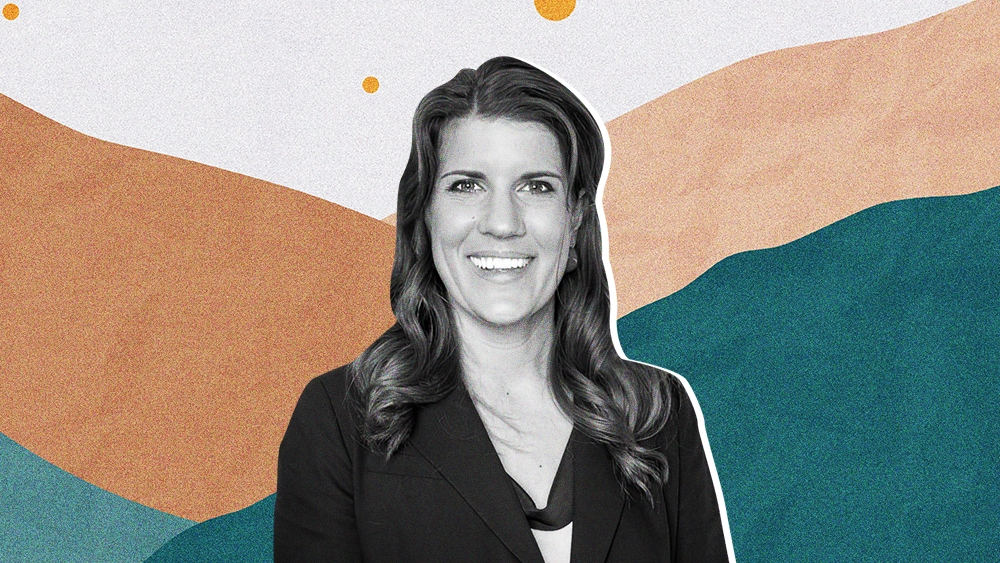
Christina Frantom, Internal Communications Lead at Mercedes-Benz U.S. International, shows how manufacturing is finally making two-way communication work as technology turns frontline input into action leaders can use.
The last five years have completely changed the circular communication flow. We can now take individual concerns, analyze them, and turn them into information leaders can actually act on.

Christina Frantom
Top-down communication hasn't dominated manufacturing because leaders liked it. It dominated because listening at scale used to be a nonstarter. Inside massive metal plants packed with equipment, real-time feedback simply couldn’t travel far or fast enough to matter. That constraint is finally cracking, and now more than ever, leaders can hear frontline input clearly enough to do something with it.
Christina Frantom is a member of the Ragan Communications Week advisory board, serves on the Governor's State Workforce Council, and is Internal Communications Lead at Mercedes-Benz U.S. International. Her background includes senior communications and marketing roles at Heineken USA and the University of Alabama, along with crisis and public affairs leadership in government and non-profit. She sees technology finally catching up to the work communicators have been trying to do all along, making true two-way communication possible at scale.
"The last five years have completely changed the circular communication flow. We can now take individual concerns, analyze them, and turn them into information leaders can actually act on," says Frantom. In manufacturing environments, where scale and physical constraints once made that impossible, this shift turns hard-to-get, extremely important frontline input into a more clear operational signal. It also gives communications teams a way to prove impact in terms leaders across the business can actually use.
Reduced to an average: When feedback is reduced to blunt instruments, employees quickly learn not to bother. "If you heard from ten people on an issue, the assumption was that you could work the multiplier and extrapolate that concern across the workforce," explains Frantom. "In a multi-generational, globally diverse organization, that math simply doesn’t hold." She adds that before smartphones put a computer in every pocket, annual surveys dominated internal listening, but "those canned questions and checkboxes were designed for volume, not for scaling real, free-form communication people actually cared about."
Basics, but better: The change represents less a reinvention of communications theory and more the long-awaited arrival of tools powerful enough to finally streamline communication at work. As Frantom notes, "the good old-fashioned rules and concepts of strong communication planning will always win regardless of what tools you use. We're just able to do it better and faster now." These new forms of communication are already being successfully implemented by major corporations, proving the model at scale.
Pencils down: The mechanics of listening have changed just as dramatically as the expectations around it. "We used to walk the floor with a clipboard and a sharpened Ticonderoga, writing down what people said one conversation at a time," says Frantom. "Now someone can scan a QR code, share feedback instantly, and AI can analyze that input, identify patterns, map themes, and turn it into information leaders can actually use to make decisions."
But effective input is only the first step. To manage the challenge of a diverse global workforce, Frantom suggests an effective solution is a disciplined focus on standardized processes, which creates alignment where infinite customization would be impractical.
The great equalizer: "In a workforce with that much diversity, the key is to fall back on process. Standardized processes across all locations can help create process alignment, even if there is cultural misalignment. By standardizing how you communicate, when you communicate, and the tools you use, you create a familiar work environment that can be a powerful tool to help bridge cultural differences."
Carving the grooves: That emphasis on process sits inside what Frantom calls the "Three C’s" of communication planning: company, culture, and crisis. "Crisis communications is where strong culture actually gets built, because it forces every department to work together under real pressure," she says. "When you’ve laid down clear processes for a crisis, everything else flows more easily, and cultural and business activities move through the grooves you’ve already carved."
The arrival of this technology comes at a pivotal moment. The pandemic helped to accelerate a change in the path to the C-suite, contributing to new challenges for CEOs. The global crisis elevated leaders from the operations side of the business, meaning many of today's CEOs no longer come from the marketing or communications world. The 'pendulum swing' she describes has created a new political reality where communicators now need to prove their value in operational terms.
Speaking their language: "What I'm excited about is watching that pendulum swing back as we use AI and new tech to give these operations-minded CEOs the tools to truly understand the power and necessity of internal communications for their organization," says Frantom. "I think that's happening now."
As with any powerful new technology, the excitement around AI is matched by its potential for misuse. Frantom cautions that these powerful tools in the hands of an inexperienced practitioner are a "recipe for disaster." The takeaway is for communicators to embrace innovation, but with the wisdom that comes from experience. "If you give a brand-new driver a race car, they'll look cool for about a second, and then they're going to wreck it. But if you give that same car to someone who's been driving for 20 years and understands the bumps in the road, they're going to make that thing sing," Frantom concludes.