All articles
When Culture Shifts, Global Brands Protect Their Identity By Clocking It Early
Gavin Lum, Head of Group Branding & Communications at TPC, explains how cultural fluency preserves brand integrity across global markets and shifting economies.
A brand's DNA and promise should remain consistent, but how we express it to the customer we want to engage with must adapt.

Gavin Lum
A brand's core promise is its anchor, but the way that promise lands with an audience depends entirely on whether it reflects the lived reality of the market it's trying to reach. When culture shifts, economic conditions change, or the emotional landscape of a population moves from optimism to fatigue, a message that once inspired can start to alienate. The brands that endure are the ones that read those shifts in real time and adapt their expression without abandoning their identity.
Gavin Lum is the Head of Group Branding & Communications at TPC (Tsao Pao Chee), a fourth-generation family business headquartered in Singapore that's committed to advancing a well-being economy through purposeful enterprise across investment, production, hospitality, and leadership development, held together by long-term stewardship. He spent sixteen years leading brand strategy for Nike, Adidas, Lululemon, and ANTA across Greater China and Southeast Asia, building campaigns that tracked directly alongside the country's economic rise and, eventually, its cultural recalibration. Watching brands rise and fall alongside China's own economic and emotional trajectory shaped Lum's conviction that cultural timing determines how well a company's message lands with its audience.
"A brand's DNA and promise should remain consistent, but how we express it to the customer we want to engage with must adapt," he says. Through his career, he's observed how the brands that read cultural shifts early enough to adjust their expression have thrived while the ones that insisted on repeating what worked in a previous era lost ground.
When "Just Do It" stopped working
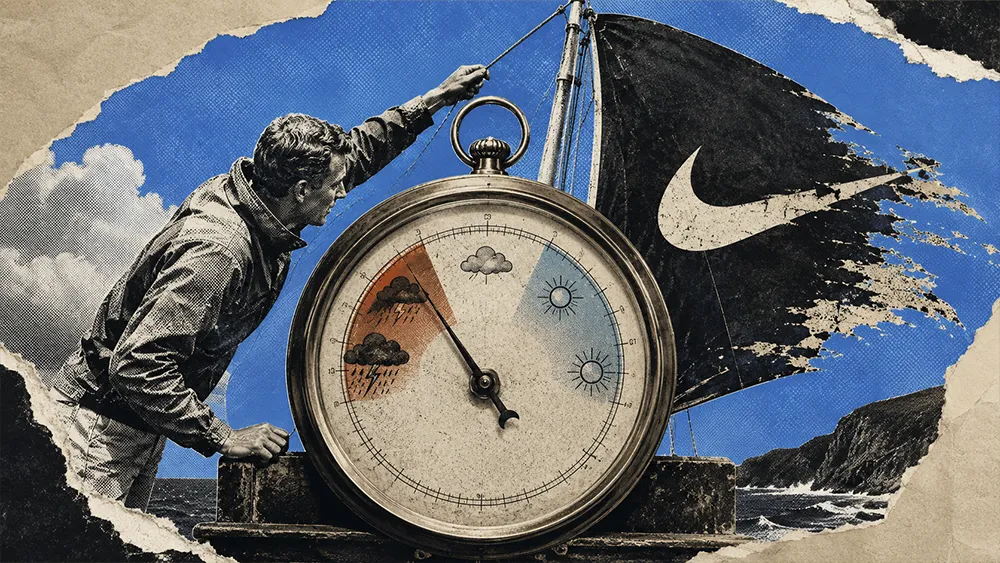
For more than a decade, Nike's "Just Do It" slogan was perfectly aligned with China's cultural trajectory. The country was rising. Students were heading to American universities. Michael Jordan, Kobe Bryant, and LeBron James embodied the idea that personal agency and relentless effort could produce extraordinary outcomes. "Everybody resonated with 'Just Do It' as a language," Lum recalls. "There was a very strong parallel to the culture. Every effort you put in resulted in very tangible results financially and physically. Everybody believed in just doing it."
The tipping point came gradually, then all at once. COVID removed freedoms overnight, the property market collapsed, small businesses couldn't sustain themselves, and unemployment rose. The narrative of personal control that had powered the brand's relevance for years collided with a reality where effort no longer guaranteed outcomes. "Insisting on 'Just Do It' in that kind of language, with those kinds of promises, it just didn't move the needle anymore," he says.
The challenge for Nike isn't that its DNA is wrong. The problem is that the expression of its message in China failed to evolve to meet a market whose emotional landscape had fundamentally changed.
Adidas and Lululemon read the shift
Adidas faced similar headwinds. When the brand tried to revive "Impossible Is Nothing" in China, audiences didn't respond. The aspirational framing felt disconnected from a population that had grown skeptical of grand promises, so Adidas pivoted to "You Got This," a message built around companionship rather than conquest. "It's like, 'Hey, things are tough, but we are with you.' That helped Adidas get more traction and relevance in the market," Lum shares.
Lululemon made a parallel move, but through wellness rather than sport. The brand had always targeted what Lum describes as the "super girl" persona: the woman who wants the best in every dimension of her life. But during COVID, that expression shifted from physical performance to holistic health. "Because they were so tired and burned out from pushing so hard, mental health was at the forefront. At Lululemon, we started to create a conversation around not just physical wellbeing, but mental health and social health as well. In order to feel good, you have to be connected. Not everybody is an enemy to crush."
The brand's identity didn't change, nor did the audience it served. What shifted was the lens through which the message was delivered, and that adjustment kept it culturally relevant while competitors were still broadcasting outdated ambition narratives.
Different markets, different vehicles
Lum's experience at ANTA, the Chinese sportswear brand expanding into Southeast Asia, illustrates how the same principle applies across geography. ANTA's brand promise, "Keep Moving," carries a universal theme of resilience and perseverance, but how that theme comes to life differs dramatically by country.
In Malaysia, Lum explains, running culture gravitates toward community runs in parks rather than solo urban routes, so the brand invested in local running communities and safer, closer-to-home activations. In the Philippines, basketball is a cultural institution that gives people an emotional outlet, so ANTA sponsored leagues from high school through university. In Thailand, the culture is more expressive and style-oriented, so the brand leaned into fashion-forward, sport-inspired aesthetics rather than competitive performance. "It's a reflection of how people embody the same idea through their environment, through their own cultural mindset, with their communities," Lum says.
The research behind these decisions wasn't purely quantitative. His ANTA leadership would send teams to walk the markets, visit retail environments, observe how people shop, and study the physical infrastructure. "Are there more basketball courts or running tracks? That's a very telling sign. If they don't bother to repair basketball courts, obviously the infrastructure doesn't support the sport. Whereas if there's investment in it, that tells you something."
The authenticity filter
Cultural fluency also means knowing when not to act. Lum shares an example from his time at Adidas when Ultimate Frisbee was gaining popularity in China. Players needed good traction for the grass fields the sport is played on, which opened a potential commercial opportunity for soccer cleats. The temptation to sell to a growing audience of frisbee players was obvious, but the brand declined. "If we stood for performance in the game of soccer, then we shouldn't dilute what we stood for by communicating that this is a shoe for Ultimate Frisbee," Lum says. "Otherwise, soccer players would question whether this is really for them. We'd dilute our professional performance credibility." It's a filter Lum believes every brand should apply before jumping into a cultural moment: does this reflect who we are, or are we borrowing relevance from something we don't own?
The throughline across all of Lum's examples is that brand integrity and cultural adaptation are complementary disciplines. The brands that hold their identity too rigidly lose relevance, while the ones that chase every cultural moment lose credibility. The ones that read the emotional landscape of each market, choose the right vehicle for their message, and know when to stay out of a conversation entirely are the ones that sustain both relevance and trust across borders and decades.