All articles
The Zoom Town Hall Is Dead. Enterprises Are Building Broadcast Networks Instead.
A global enterprise quietly replaced its entire internal streaming stack with a broadcast-grade platform four years ago. Now the rest of corporate America is catching up.
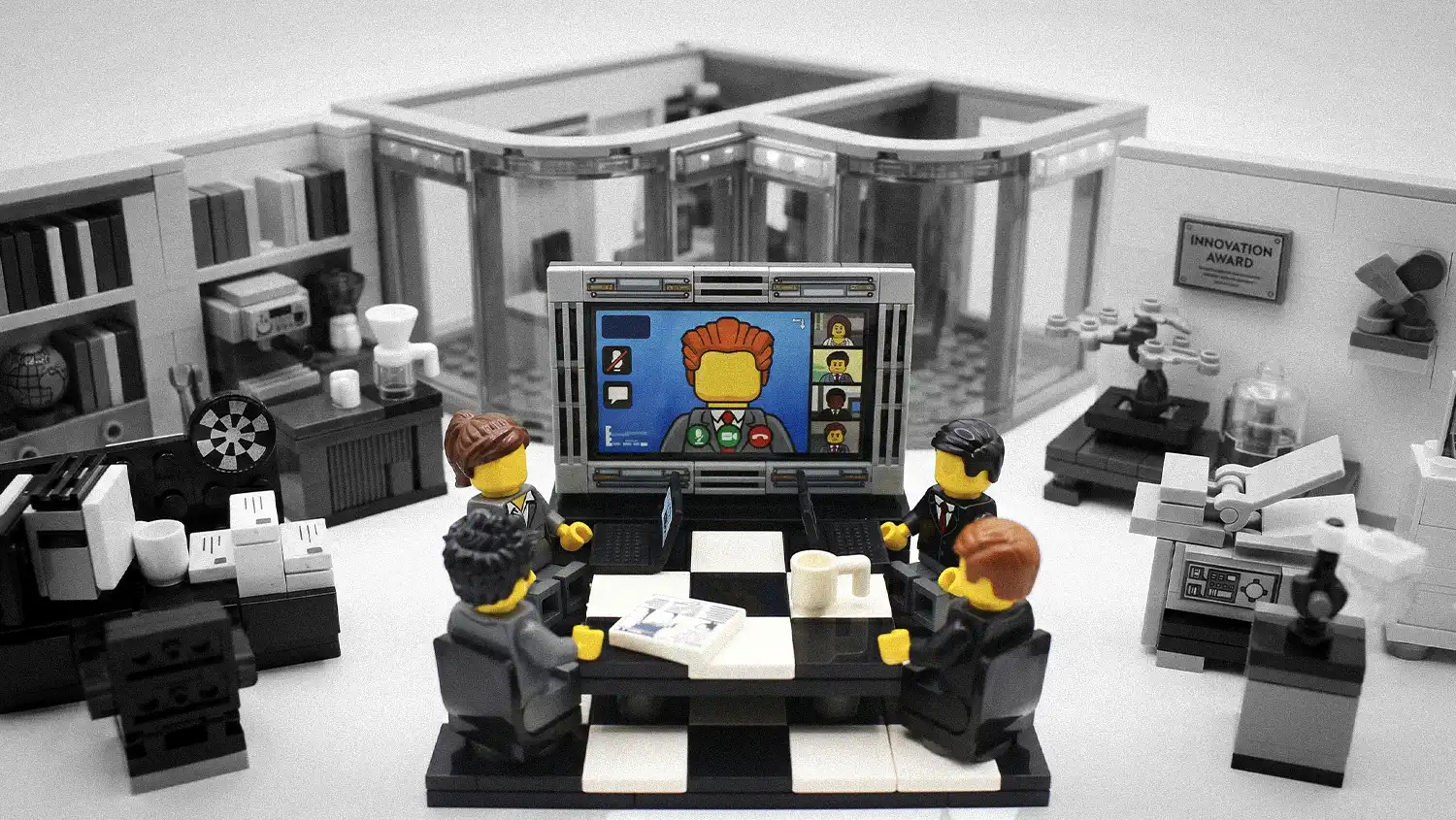

For most of the past decade, the corporate town hall ran on the same infrastructure as the Monday morning standup. A Zoom link, a shared screen, and a prayer that nobody's internet would cut out while the CEO was mid-sentence. Companies across industries are evolving away from that setup and replacing it with purpose-built platforms designed for high-stakes internal communications. The data on the costs of poor production quality to engagement and retention is hard to dismiss.
The infrastructure gap
The core problem is a mismatch between what the tools were built for and what they are being asked to do. Zoom, Microsoft Teams, and Google Meet were designed for meetings. A CEO addressing 15,000 employees across three continents is a broadcast, and the gap between those two things is significant. When thousands of employees log on expecting clarity from leadership, a meeting tool built for ten people cannot hide what it is. The quality of the signal is itself a message.
Vizrt's employee engagement research puts numbers behind what many IC teams already sense. 69% of employees say the quality of communication they receive from their company affects their engagement, and 40% say poor video quality could make them consider leaving. For a CFO, that is a retention risk sitting inside the A/V budget conversation.
Four years ahead
One global enterprise saw this coming before most. Its town halls were running on Zoom meetings piped into a Workplace from Meta plugin, with a LumApps intranet as a loose wrapper around the whole experience. The video quality was inconsistent, the workflow was difficult to control, and the setup offered none of the production flexibility a growing broadcast operation needs. When leadership started expecting output that looked like television, the team issued a formal RFP with a clear mandate: replace the entire legacy streaming stack with a broadcast-grade platform that could live inside their intranet and scale with the business.
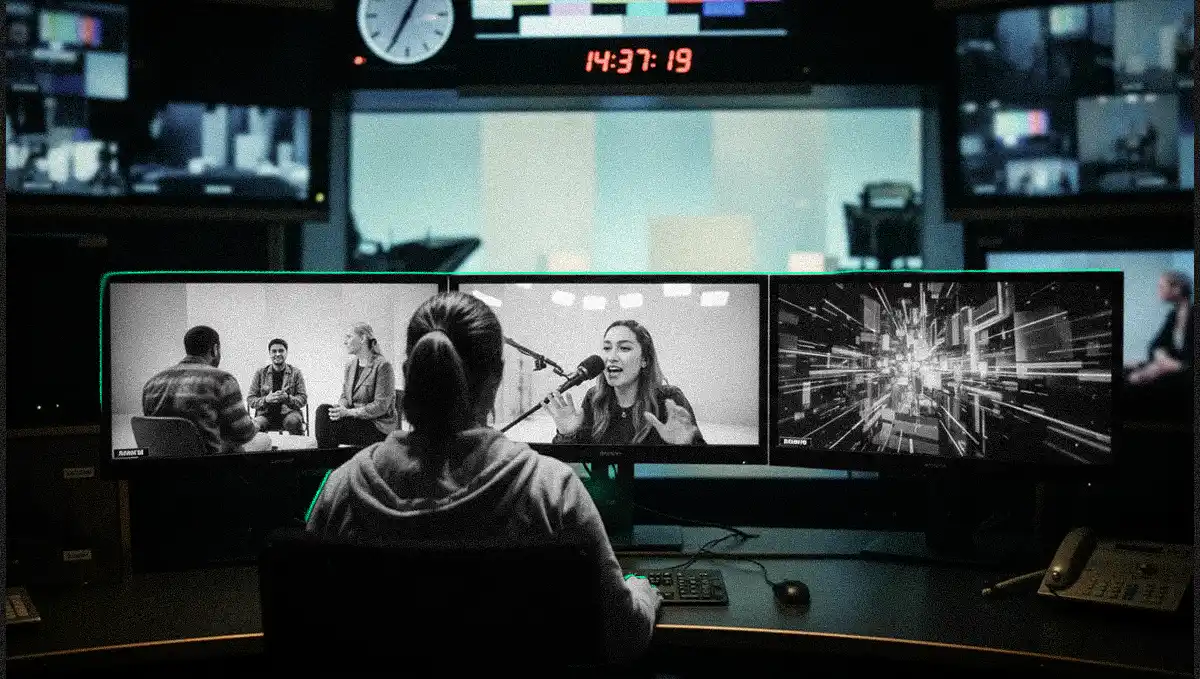
They chose Brandlive. Four years on, the operation looks nothing like what it started as. The enterprise now runs 90 to 100 live broadcasts a year, operates two dedicated studios with ceiling-mounted cameras, and produces individual events with more than 100 shots across multiple presenters. Every broadcast auto-archives into an on-demand library, and a podcast feature converts recordings to audio for employees who want to catch the CEO's quarterly update during a commute. What started as a one-person operation has become an in-house content network, with the same tool powering town halls, executive recordings, and employer-brand content, all delivered natively inside the intranet employees already use. Once the team mastered the tooling, usage spread on its own. More leaders and more business functions started asking to get on camera. Brandlive calls it the "spiral effect," and it is the clearest sign that a communications team has stopped being a support function and started operating as a content engine.
Broadcast is the new baseline
The product launches confirm where the market is heading. Brandlive launched BrandTV in March 2026, a full enterprise streaming platform built specifically for town halls and on-demand internal video, with production tools and AI-generated highlights, and a content lifecycle designed to extend every live broadcast into weeks of engagement. In the same month, Brandlive and Synergy SKY announced an integration that lets enterprises turn existing Zoom Rooms and Cisco hardware into broadcast-grade production stages without replacing their setups. Conferencing tools were never the right foundation for internal broadcasting, and vendors are now competing to fill the space reality has created.
The internal communications platform market was valued at $3.8 billion in 2025 and is projected to reach $9.6 billion by 2034. Those figures reflect organizations actively retiring legacy intranets and conferencing workarounds in favor of purpose-built alternatives. Simpplr's 2026 research found that 96% of C-suite executives support increased investment in internal communications, with two-thirds saying "yes, definitely." The executive appetite is there, and the infrastructure buildout is following it.
The engagement math
None of this spending happens in isolation. U.S. employee engagement hit a decade low in 2024, with only 31% of employees reporting they felt actively engaged. Globally, low engagement cost the world economy an estimated $438 billion in lost productivity, according to Gallup. That number has made internal communications a boardroom conversation in a way it never was before.
The Gallagher 2026 State of the Sector report lays out the problem plainly. Seventy-three percent of IC teams want to operate as strategic partners to the business, and only 18% currently do. Most are still pushing messages out without the tools or setup needed for those messages to actually land. The ambition is widespread, even if the operational reality hasn't caught up to it yet.
The town hall as a product
Leading organizations have stopped treating the town hall as an event. The enterprises investing in production-grade infrastructure are treating it as a content asset, something designed, measured, and iterated on with the same discipline applied to anything customer-facing.
When a producer can run multi-camera switching and overlay graphics from a single interface, and every broadcast auto-archives into an on-demand library, the town hall extends well beyond the live hour. Employees catch it on demand, clip it for onboarding, or listen to the CEO's quarterly update on a commute.
Sam Kolbert-Hyle, President and CEO of Brandlive, framed the urgency plainly at the BrandTV launch. "AI has transformed the way we work. As generative AI tools flood organizations with content, something important is being lost. Messages are becoming generic, repetitive, and harder to trust. When everything can be generated, live is what's real," he says.
The enterprises that moved early are already operating at a level that makes legacy setups look obsolete. The ones still running town halls on conferencing software are losing ground on employee trust, and every quarter they wait, the distance grows.