All articles
Signal Selection Is Helping Communications Teams Cut Through Data And Cultural Clutter
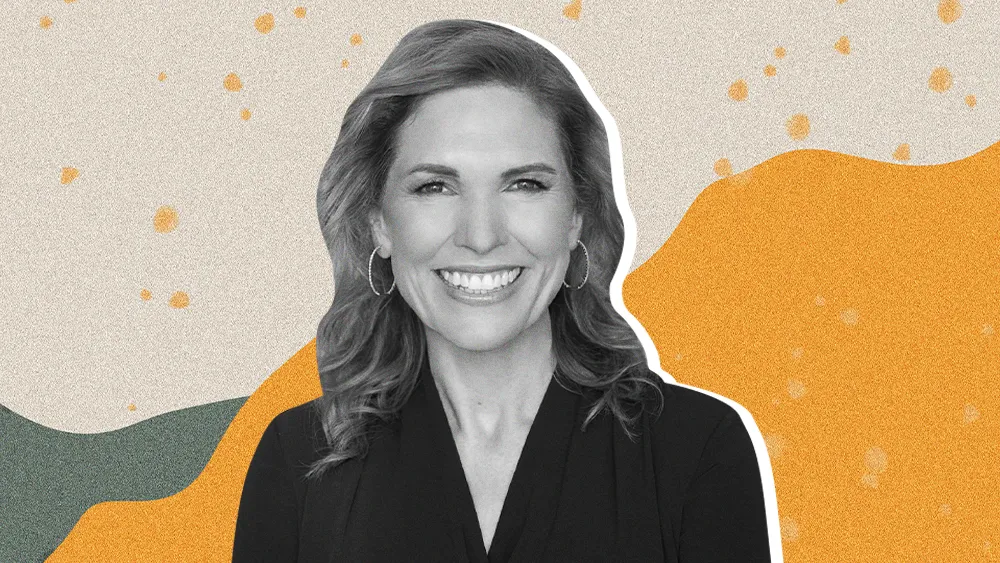
Kate Yee, Acting Head of Communications & Public Relations at Sojern, is using AI, travel data, and human judgment to help brands navigate the conflicting narratives surrounding the 2026 World Cup.

The through line for us is: What is the data saying? How do we contextualize that in a way that makes sense for your readers and that’s going to be really meaningful and valuable for them?

Kate Yee
Right now, travel brands preparing for the 2026 World Cup are navigating a confusing mix of signals. Some partners are riding a wave of fan enthusiasm and rising demand, while others are bracing against forecasts warning a hotel boom may fall short of expectations. For communications leaders inside those brands, the harder work has become deciding which data points deserve to shape the consumer-facing story. Knowing which signals deserve amplification and which to let pass has become a core part of modern comms work, and the teams that handle it well will lead the category conversation around the tournament.
Kate Yee, Acting Head of Communications & Public Relations at AI-powered travel marketing platform Sojern, knows exactly what cutting through that kind of industry noise looks like. Drawing on 16 years advising C-suite leaders at brands including Apple, Hyatt, and The Estée Lauder Companies, she has built a practice that spans massive travel data, cultural mega-events, and AI. In her first 120 days at Sojern, Yee built a U.S. PR function from scratch, generated more than 1.8 billion earned media impressions, and steered the narrative through the company's global merger with competitor Adara. Her approach runs on a strict hierarchy: lock down internal clarity first, then use data and AI to decide which external opportunities deserve a story.
"The through line for us is: What is the data saying? How do we contextualize that in a way that makes sense for your readers and that's going to be really meaningful and valuable for them?" says Yee. Before chasing any external news cycle, Yee locks down the internal narrative as a tier one priority, ensuring teams understand the commercial objectives and feel confident about what is changing within the business and what is staying the same. That discipline became especially visible during the company's global merger with Adara, when her immediate focus was building internal clarity to protect day-to-day business operations. "It took a lot of intention to get everyone around the table and on the same page about what coming under one new umbrella would look like internally, so we could effectively convey that to our customers," she explains.
Data behind the demand
Once the internal foundation is solid, Yee moves to tier two: finding stories where a company's unique value proposition meets the cultural moment. For Sojern, that means leaning into its view of global travel intent as the World Cup approaches. Mega-events of this scale naturally generate conflicting forecasts across the industry, so Yee's team turns straight to the data for clarity. "When people are speculating wildly, we always have to ask what the data says," she notes. "We have very clear and robust data that shows increases in flight bookings across nearly every host city, and those numbers continue to hold. Regardless of whatever other travel signals or inbound softness we saw this spring, the World Cup is an outlier. Sports fans see it as a non-negotiable."
Sojern's network of hundreds of data partners gives the team real-time visibility into where people are searching and booking, allowing them to craft narratives that resonate at the city level. Kansas City, for example, is seeing a high share of inbound travel from Latin American origin markets, while New York's meaningful increases sit on top of an already high baseline of visitors and long-standing transit capacity concerns. To keep those insights actionable across 16 host cities, Sojern's platform runs roughly 30,000 campaigns a second, with autonomous agents optimizing creative, targeting, and bids in real time while human experts retain oversight, a working example of how agentic AI is reshaping modern brand discovery. Yee's team also uses AI as a workflow assistant for first drafts and brand-guideline checks, a discipline other communications leaders are deploying to strengthen trust and clarity across internal communications.
Judgment beyond the prompt
Even with this infrastructure in place, Yee is the first to push back on the idea that automation does the thinking for her team. Her preference is a culture of experimentation, where tool limitations become learning opportunities rather than blockers. When AI hits a wall, the team uses the friction to sharpen its own collective instincts through structured peer exchange. "I'm sure I'm not the only one who's gotten trapped in a loop trying to get AI to do something it's just not ready for," she says. "In those moments, you have to take a step back and approach it from another angle to get a more efficient, high-quality result. We upskill every day through weekly brainstorms where our marketing team sits down to ask what we have tried this week and what AI is unlocking for us."
Yee's commitment to human judgment runs deeper than process. She notes that AI already writes a substantial share of Sojern's code, freeing people to focus on the work only humans can do well. For comms practitioners specifically, this has meant doubling down on soft skills like judgment, creativity, and relationship-building, the same human factors other leaders cite as central to maintaining a creative edge and authentic connection inside AI-heavy organizations. "There is a shift in your career where you move from being a doer to an influencer," Yee observes. "Many people get stuck in that doer mentality and don't realize that they've already made the shift. They're already in that space of being an influencer of people, and their success is intrinsically linked to how they relate to and move about an organization."
An "influence over output" philosophy shapes how Yee approaches cultural moments like the World Cup or America 250. The guiding question her team returns to is a straightforward one: What does the consumer actually need from the brand in this context? She offers the example of a mother traveling with children to a World Cup match, who may care most about flexibility, clear information on what will be available on board, and whether the brand's messaging actually accounts for her experience. When internal priorities inevitably clash, consumer empathy becomes the team's reliable north star. "When brands put themselves in the shoes of the people they want to connect with, it shows," Yee says. "When we get too sidetracked by what someone up the chain really wants to see as the headline and stop thinking about what the everyday consumer needs to see from us, that's where brands can really miss the point."
Mapping meaning through movement
For communications leaders facing the dual pressures of AI-driven discovery and a rapidly evolving travel landscape, Yee's approach maps a clear path from raw industry data to consumer-ready storytelling. AI can confirm that booking intent is climbing into a host city, but human teams are still the ones who interpret what those movements mean for different audiences. Translating macro-level travel data into micro-level human experiences is where the comms function adds its sharpest value, especially when cultural moments like the World Cup arrive with more noise than signal. "Our storytelling has to have an audience, and that audience is first and foremost what makes our business move," she says. "We can never lose sight of what they need from us, and we have to show up in ways that are relevant for them, particularly in the context of these cultural moments they want to be a part of. They're there, and they're going to be willing to engage with a brand that's showing up in a way that makes sense."
The core lesson from Yee's playbook is that even in a market defined by agentic AI and granular travel data, the most resilient infrastructure a comms team can build is relational. Internal influence, consumer empathy, and signal selection hold steady regardless of which platform, partnership, or mega-event sits at the center of any given quarter. For Yee, the leaders who lean into that human work are also the ones who tend to enjoy it most. "It's about enjoying getting to know the diversity and the multitudes of life that are contained in these companies, and helping them move forward in ways that are creative, unexpected, joyful, and kind. That makes the work that much better," she concludes. "I think those are the cultures that I want to chase and be a part of and where leaders really thrive."