All articles
Aligned AI Narratives Turn Employee Skepticism Into Enterprise Adoption Momentum
Zack Kavanaugh, VP at FleishmanHillard, explains how conflicting AI narratives erode trust and why aligning messaging is key to turning employee hesitation into adoption.

They’re treating this transformation like a technology problem, when it’s truly a people problem. And until we recognize that difference, adoption is going to continue to stall.

Zack Kavanaugh
There's a story mismatch in corporate that's slowing down enterprise AI adoption. In meetings with investors, executives regularly highlight how AI will drive cost savings and streamline their workforce. Meanwhile, internal comms is tasked with reassuring employees their jobs are safe as AI scales. A misaligned communication strategy like this can have highly detrimental effects, with some studies showing up to 30% to 40% of employees quietly resisting or even undermining enterprise AI initiatives.
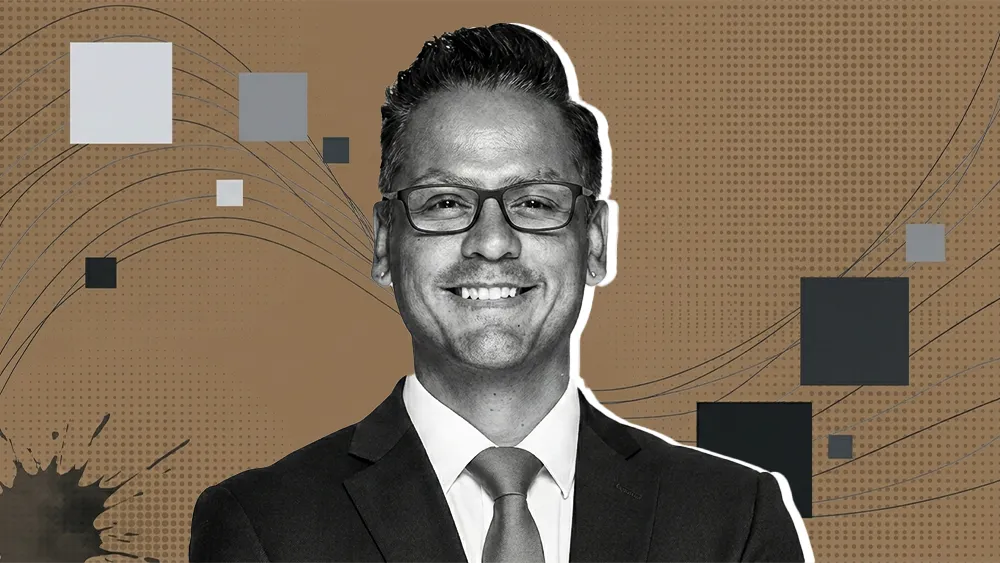
One executive actively bringing nuanced strategy to AI adoption internal communications is Zack Kavanaugh, Vice President at the global public relations firm FleishmanHillard. Sitting in the agency's Talent + Transformation practice, Kavanaugh has spent nearly a decade rising from intern to his current role leading the firm's HQ AI Center of Excellence. From his vantage point, closing the gap between the boardroom’s vision and the frontline reality requires leaders to rethink how they talk about automation inside the company.
"They’re treating this transformation like a technology problem, when it’s truly a people problem. And until we recognize that difference, adoption is going to continue to stall," Kavanaugh says. It is a common trap for leadership teams to prominently feature AI in investor presentations to signal growth, while internal messages emphasize valuing and supporting staff. When those stories do not line up, it erodes employee trust and fuels a growing crisis of confidence in corporate leadership.
Two-faced tech: Leaders need to be aware that employees are paying close attention to their narrative. "You have a lot of companies communicating to the street that they're going to drive efficiencies, save work, and find headcount synergies. Then you have internal communicators telling people they are valued and finding ways to shape their roles and careers. Employees are going to point out the gap and the inconsistency in who you communicate to and how," says Kavanaugh.
Finding the right messaging strategy is a start, but comms teams must follow through with action. Kavanaugh believes that a sustainable approach starts with a structured change methodology that builds a level of true support as employees learn new tools at work. Historically, software rollouts have often defaulted to IT handoffs focused on logins and basic training. But building the right environment requires putting a continuous listening infrastructure in place. FleishmanHillard decentralizes the conversation through naming "AI champions" across teams—from consumer to B2B to public affairs—who surface questions and relay them back up to leadership.
Build listening in: Kavanaugh says the infrastructure only works if the conversation flows in both directions. "We are trying to build this culture of conversation around AI. Every one of these champions should be having a conversation amongst their team. What questions do people have? What hesitations, what new product features are rolling out? A big piece of this is simply ensuring that everyone is being brought along, their hesitations and concerns are being heard, and we are cascading that back upward to ensure we are getting those things addressed."
With trust rebuilt through consistent listening, comms teams can focus on their most valuable role translating complex AI concepts into plain language that reduces fear and builds confidence in employees to engage with the technology. Part of that means understanding what motivates the workforce in the first place. Kavanaugh points out that many leaders skip that motivational question entirely, building a business case for AI while ignoring what employees actually want to get out of it.
Pavlov's playbook: "We are completely failing to ask that question. What does this person want to get out of this? What's in it for the employee?" he says. "We assume that, because we have a business case in place, we've built a logical case for why we should do this. But employees are not interested in efficiencies." The more effective strategy, Kavanaugh suggests, is to build an adoption strategy that develops skills to help employees' careers as well as serving the business case.
Pantry over prompts: Kavanaugh's method for demystifying the AI stack for employees is using a kitchen metaphor. He thinks of the AI agent as the "chef," the prompt is the "recipe," and the knowledge base is the "pantry of ingredients." Giving people a practical mental model is simply a faster way to get them comfortable with the software, rather than asking them to parse abstract notions like tokens and context windows. "I think those are the type of things that stick, instead of talking about tokens and context windows. People are going to tune out. They're going to say, 'No idea what that means. This is not for me," he says. "You need to make it real and you need to ensure that they can identify with what you're communicating about.”
Clear framing doesn't just boost comprehension, it helps reduce employee anxiety around job security. By emphasizing the technology's limits and the continued need for human judgment, comms teams are uniquely positioned to close the trust gap between employees and leadership that so often stalls adoption. This approach isn’t just Kavanaugh’s theory, it’s the new internal comms playbook for many organizations.
Not just the messenger: Rather than sitting at the end of the line to announce a rollout, comms teams are being pulled into programs earlier to shape the strategy, test language, and build feedback loops. Many are borrowing from established change-management approaches and AI-focused internal comms playbooks that emphasize ongoing dialogue and visible leadership sponsorship. "Leaders and comms specifically should start to frame their role as less of solely the arbiters of broadcasting messages and more of those who are connecting with their people," he says.
Long-term adoption requires ongoing dialogue and everyday practice. Treating AI like a one-off software update is a guaranteed recipe for failure. Organizations that focus only on rolling out platforms risk missing the ultimate goal: to rewire how work gets done through repeated, low-stakes practice and peer support. "If you don't have leaders modeling being visible and actively asking questions, if you haven't brought in skeptics to poke holes in your strategy, if you aren't rolling out low-stakes ways for people to engage, people will regress back to the status quo," Kavanaugh warns.
That requires a cultural and operational reset, not just a temporary training campaign. "It's really important that companies not only view this as rolling out one thing out. It's about reorienting how the work gets done and bringing people along for the long haul," he says.